Best Toasters of 2026: Our Top Picks, Ranked by Real-World Reliability
Our top picks ranked by real owner-review patterns — not specs. Plus what to skip and why.

Most people do not think much about their toaster until it starts failing in small, annoying ways: bread that comes out pale in the middle and burnt at the edges, a burning smell that keeps returning, a lever that stops popping up, or a bagel setting that works on one side but not the other.
That is why this guide is not built around glossy product photos or the longest feature list. We treated this as a review-pattern research project: looking for repeated owner feedback across Amazon, durability discussions on Reddit, and published reliability information from Consumer Reports. Then we ranked toasters by the problems buyers actually complain about after living with them: uneven browning, weak heating elements, poor slot design, hard-to-clean crumb trays, plastic smell, and early mechanical or electronic failure.
So before the picks, here is the core question this guide answers:
Which toaster is least likely to become annoying after the return window closes?
Why trust this guide
We did not physically lab-test every toaster on this page. Instead, this is a review-pattern guide: we looked for repeated signals in owner reviews, complaint language, long-term use comments, and cross-platform discussions. That approach has limits, but it is useful for one specific question: what problems show up after people actually live with the toaster?
To avoid overstating the evidence, we treat Amazon ratings, review counts, and "bought in past month" indicators as a snapshot of one moment, not permanent facts — they shift week to week, and we're not pretending to track them live. A high rating can hide repeated complaints, and a lower-volume product can still be a better fit if its complaint pattern is cleaner. When we mention a failure pattern, we are describing what appeared repeatedly in the review samples and discussions we checked — not claiming every unit will behave the same way.
Quick answer
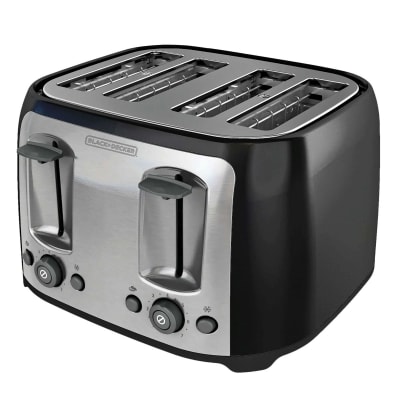
The BLACK+DECKER 4-Slice Toaster is the best all-around toaster for most kitchens because it carries one of the deepest bases of long-term owner feedback in our review set, without a clear repeated complaint pattern in the samples we checked. Four slots also means a typical household does not need to run multiple rounds every morning.
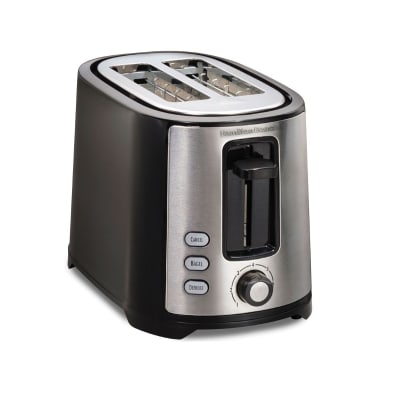
The Hamilton Beach 2-Slice is the best budget pick because it pairs a simple mechanical dial with extra-wide slots, a Toast Boost lever for smaller items, and an auto shut-off function — backed by a solid owner-review base at its price point, without the complex preset systems that add failure points on pricier models.
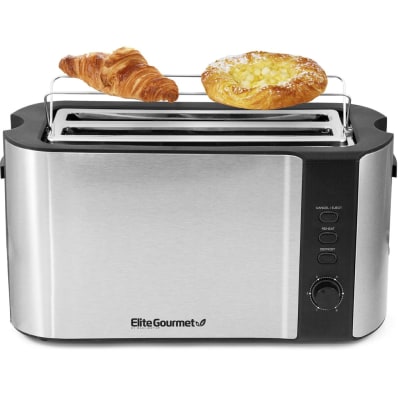
The Elite Gourmet ECT-3100 long-slot 4-slice is the best pick for bagels, sourdough, or thick bakery bread. As of this writing, it carried Amazon's "Overall Pick" badge in its category and showed one of the stronger monthly purchase indicators among long-slot toasters we checked — without the same repeated heating-element complaint pattern we saw on a pricier long-slot competitor (more on that below).
Jump to: Best Overall · Best Budget · Best for Bagels & Thick Bread · Decision Matrix · Amazon Popularity Check · What We'd Skip · How Complaints Escalate · How We Chose · FAQ
This post contains affiliate links. If you buy through them, we may earn a commission at no extra cost to you. Our editorial policy →
At a glance
Which one should you buy?
If you already know what kind of kitchen you have, use this quick decision table before reading the full reviews.
A simple rule: do not buy more toaster than your breakfast routine actually needs. A premium long-slot toaster makes sense if you use it every day or toast non-standard bread. For occasional white bread, a basic mechanical model is usually the smarter buy.
Best Overall: BLACK+DECKER 4-Slice
The BLACK+DECKER 4-Slice is our top pick because it carries one of the deepest bases of long-term owner feedback in our review set, without a clear repeated complaint pattern in the samples we checked. When a product has that much real-world feedback and the complaints do not cluster around one obvious failure signature, that is useful reliability evidence, not just popularity.
The design is practical rather than feature-heavy: a lever, a browning dial with seven shade settings, and extra-wide slots that fit bagels and thicker slices without much fuss. There is no touchscreen, no app, and no complicated preset system that adds more failure points without making breakfast meaningfully better — the same "fewer parts to fail" logic that appears in many of the cleaner complaint profiles we reviewed.
Four slots also matter for a different reason: a typical household of three or four does not need to run multiple toasting rounds every morning, which is the most common practical reason people upgrade from a basic 2-slice model in the first place.
It is not the cheapest toaster on this list, and it takes up more counter space than a 2-slice model. But for most households, it hits the right balance: well-supported by owner feedback, simple to operate, and sized for real family use.
Best for: households that regularly toast more than two slices at once, and anyone who would rather buy a model backed by tens of thousands of long-term owner reviews than a smaller, newer sample.
Skip it if: you live alone or as a couple and rarely need more than two slices at a time, or your counter space is genuinely tight — see our budget pick below.
See today's Amazon price for the BLACK+DECKER 4-Slice →Best Budget: Hamilton Beach 2-Slice
At the budget end, the safest toaster is often not the one with the most buttons. It is the one with the fewest unnecessary parts — and, ideally, a track record of people actually living with it.
The Hamilton Beach 2-Slice fits that description. It uses a simple shade-selector dial, extra-wide slots, a slide-out crumb tray, and an auto shut-off function — nothing flashy, but a solid owner-review base, with no dominant failure complaint standing out in the samples we checked. Its Toast Boost lever also raises smaller items like English muffins higher out of the slot, which matters more in daily use than it sounds.
The easy-access crumb tray is more important than it sounds. A neglected crumb tray is one of the most common reasons a toaster starts producing a lingering burnt smell. If your current toaster smells smoky even when the bread is not burning, start there. We cover this in more detail in our guide to toaster odors.
The tradeoffs are real. It is a 2-slice model only, the finish is basic rather than premium, and thick artisan bread may need careful positioning to fit the standard slot width. It also does not carry the same review volume as our other two picks — a smaller, but still clean, sample.
But if your goal is simply "good toast without spending much, from a long-running brand with a clean complaint profile at this price point," this is a sensible toaster to buy.
Best for: students, renters, small apartments, occasional toast eaters, and anyone who wants a low price without a recurring failure pattern showing up in the reviews.
Skip it if: you regularly toast bagels, sourdough, thick homemade bread, or breakfast for three or more people at once.
Check current Amazon price for the Hamilton Beach 2-Slice →Best for Bagels & Thick Bread: Elite Gourmet ECT-3100
The ECT-3100 is not on this list because it is the most expensive option. It earned its place because it solves a specific fit problem a standard 2- or 4-slice toaster cannot: bagels, sourdough, baguette slices, and thick bakery bread that sit awkwardly — or do not fit at all — in a standard slot.
The long-slot layout gives bread more room and reduces the need to flip, force, or re-toast. It also carries Amazon's "Overall Pick" badge in its category and shows one of the stronger monthly purchase indicators among long-slot models we checked, which points to a meaningful base of current buyer interest rather than only an old review count.
We want to be direct about something here. We looked closely at premium die-cast long-slot toasters in this category, including a well-known Breville model, and we are not recommending it as our top pick. In the reports we reviewed, a similar pattern appeared more than once: the outer heating elements worked consistently, while the inner portion of each slot appeared under-toasted. That is exactly the kind of fit-and-browning problem a long-slot toaster is supposed to solve, not create. We go into more detail in "What we'd skip" below.
The ECT-3100 does not have the die-cast finish or brand recognition of a premium model, and very thin slices can occasionally toast closer to the edges than the center in a slot this long. Neither is a dealbreaker, but worth knowing going in.
A quick note on how we're framing this pick: a Hub guide like this one has to compress an entire category down to one answer per use case, and "bagels and thick bread" covers households of very different sizes. If you want the fuller picture — including a 2-slice long-slot option that fits smaller kitchens and solo or couple households better than a 4-slice model, plus the specific design factors (slot width, heating-element layout, centering) that actually determine whether a toaster handles bagels well — our dedicated bagel and thick bread guide breaks it down by household size rather than giving one answer for everyone.
Best for: daily toast eaters, bagel households, sourdough lovers, and anyone tired of bread that does not fit in a normal slot — without paying premium pricing for a long-slot model where we saw a repeated heating-element complaint pattern.
Skip it if: you have limited counter space or only toast basic sliced bread — a 2-slice model is simpler and cheaper.
See current Amazon price for the Elite Gourmet ECT-3100 →What we'd skip
There are two kinds of toaster problems we take especially seriously: repeated heating-pattern complaints and repeated smell complaints.
A single bad review does not prove a toaster is bad. Small appliances have defective units, shipping damage, and user-error issues. But when independent buyers describe the same failure pattern in similar language — especially after several months of use — that becomes more useful than a polished product page.
Be careful with basic 4-slice models that toast unevenly across slots
Basic 4-slice toasters can look like the obvious upgrade, but they are not always more reliable. A pattern we saw repeatedly in owner complaints is uneven heating between the inner and outer slots. In some models, the outer slots run cooler than the inner slots; in others, one side of the bagel function weakens or stops working while the rest of the toaster still turns on.
That kind of problem is frustrating because it is not always solved by changing the browning dial. If the heating layout is inconsistent, setting the toaster darker may simply overcook one side while barely improving the weaker slot.
Be careful with models that have repeated heating-element complaints
One concrete example worth checking before purchase is Breville's standard 4-slice die-cast BTA840XL. This is a different model from the long-slot BTA830XL discussed in the next section below — both share the same brand, but the failure patterns we found are distinct. We found more than one independent owner report describing inner heating elements weakening or stopping within one to two years while other parts of the toaster continue operating, making the bagel function unreliable.
That does not mean every BTA840XL will fail. It does mean we would not make it our top 4-slice recommendation without stronger long-term evidence. We go deeper on this pattern, and on Breville's lineup generally, in our full Breville toaster review.
Be careful with premium long-slot models that only heat the outer elements
This is the pattern we referenced in our "best for bagels" pick above. In the reports we reviewed, Breville's die-cast long-slot toaster (BTA830XL) came up with a specific uneven-heating complaint: the outer heating elements work, but the inner portion of the slot runs noticeably cooler. For a long-slot toaster — whose entire purpose is fitting and evenly toasting larger or irregular bread — that is a meaningful design complaint, not a minor inconvenience.
We are not saying every unit has this issue, and if you already own one and are not seeing this problem, there is no reason to replace it. But it showed up often enough in the reports we reviewed that we could not recommend it as our top long-slot pick without a clear caveat. If you are shopping for a long-slot toaster, we would start with a model that does not show this specific complaint pattern as clearly in our samples — see our pick above.
Be careful with persistent chemical or plastic smell
A mild smell during the first few uses can be normal with a new toaster. Manufacturing residue can burn off. What concerns us is a sharp, persistent plastic or chemical smell that multiple recent buyers say does not fade.
We do not recommend rejecting a model because of one or two smell complaints. But if the same smell complaint appears repeatedly in recent reviews, take it seriously — especially if buyers mention returning the product or feeling uncomfortable using it around food. More on telling normal new-appliance smell from a warning sign in our breakdown of toaster odors.
Amazon popularity check
Everything above is based on owner-review patterns, not star ratings alone — we say that throughout this guide, and we would rather show our work than just assert it. Here is how review volume and recent purchase activity compare across our three picks, plus a few models people often ask about that did not make the cut — described in relative terms rather than exact figures that go stale the moment we publish.
A high rating or a high review count does not automatically mean a toaster is reliable — the Breville row above is a good example of why. What it does mean is that enough owners have used the product to generate signals we can compare. We treat this table as supporting evidence, not the ranking criteria itself: a model with fewer reviews but a cleaner complaint profile can still outrank a more popular one with a repeated failure pattern.
Amazon Basics 2-Slice is a different case worth being upfront about: we did not find a complaint pattern to flag, and its review volume actually outpaces our budget pick. We still went with Hamilton Beach because we generally prefer recommending manufacturer brands over a retail platform's own house brand, to keep our picks independent of any single retailer's catalog — not because of anything we found wrong with the Amazon Basics toaster itself.
Review volume and purchase activity shift over time, which is why we describe them here in relative terms rather than exact figures. Always check current ratings and listing details directly on the product page before buying.
Reliability signals we weighted most
To avoid ranking toasters by marketing copy, we gave more weight to issues that affect daily use after the first few weeks. The table below also shows how we treated each signal — that is, how we separated an isolated complaint from a pattern worth paying attention to.
This is also why we did not simply pick the toaster with the highest average star rating. A 4.6-star toaster with repeated heating-element complaints can be a worse buy than a 4.4-star toaster with boring but stable feedback.
The complaint pattern we kept seeing, start to finish
Most toaster roundups treat complaints as a flat list: uneven browning, bad smell, dead heating elements, broken levers. Reading them that way misses something. When we looked at complaint threads in order — the same reviewer updating their review weeks or months later, or describing what they tried before giving up — the same rough sequence showed up again and again.
It usually starts small: toast comes out a little uneven, one side darker than the other. Most owners do not return the toaster over this. They turn the dial up, flip the bread halfway through, or just live with it. That adjustment stage is where a lot of mediocre toasters quietly sit for years — annoying, but not bad enough to replace.
The toasters that eventually get returned are the ones where that first complaint does not stay isolated. A second, separate problem shows up on top of it — usually a smell that does not fade, or one specific spot that stops heating altogether. At that point, most owners try one more fix: deep-cleaning the crumb tray, repositioning the toaster, running it empty a few times. If that does not resolve it, the review tends to end with a return or a switch to a different brand — and that is the 1- or 2-star review that shows up months after purchase, not in the first week.
This matters for how we read the data. A toaster with a few early complaints about minor unevenness is not automatically one to avoid — that is stage one, and plenty of fine toasters live there permanently without ever getting worse. What we paid closer attention to was whether a model's complaints repeatedly progressed past that first stage: uneven browning that owners specifically connected to a worsening smell, or to a slot that eventually stopped heating at all. That progression — not the existence of a single complaint type — is what separates a toaster we would flag from one we would not.
It is also why mechanical simplicity and crumb-tray access show up so often in this guide as reliability signals, rather than features we just happen to like. They intervene right at the point where this pattern usually breaks down: a toaster that is easy to clean is less likely to develop the smell that turns "a little uneven" into "we're returning this," and a toaster with fewer electronic parts has fewer places for that second, escalating failure to start in the first place.
One limit worth being upfront about: this is a pattern we noticed by reading complaints in sequence, not a statistic we measured precisely. We have not run a structured count of what percentage of complaints follow this exact path on each model, and we are not going to invent a number to make it sound more rigorous than it is. What we can say is that it showed up often enough, across enough different models and price points, that it changed how we weighted the signals in the table above — particularly why we treat an early, isolated browning complaint differently from one that already comes bundled with a second symptom.
How we chose
We did not buy a stack of toasters and run them through a lab. That matters, and we want to be clear about it.
Instead, this guide is based on a review-pattern approach. We looked across real owner reviews on Amazon, durability and complaint discussions on Reddit communities such as r/BuyItForLife and r/Appliances, and published reliability information from Consumer Reports.
What we actually did for this update
For this June 2026 update, we focused on the search paths a normal U.S. shopper would use: toaster, toaster 2 slice, toaster 4 slice, and toaster long slot. We checked products appearing across default Amazon results, bestseller-style results, and high-customer-review results, then deduplicated overlapping models by product identity where possible.
For each shortlisted model, we paid special attention to:
- repeated positive themes, such as even browning, simple controls, easy cleaning, or bread that actually fits;
- repeated negative themes, such as weak heating elements, uneven slots, levers failing, plastic smell, or early durability issues;
- review language that included time-in-use details, comparison with a previous toaster, or a specific failure description;
- whether the same complaint also appeared outside Amazon, especially in durability-focused Reddit discussions.
This method is designed to catch repeated owner-experience patterns, not to measure exact lab performance. It can miss quiet product revisions, recent quality-control changes, or issues that have not yet accumulated enough public complaints. That is why we use cautious language such as "as of this writing" and "in the samples we checked," and why we recommend confirming current ratings, price, and availability before buying.
We gave the most weight to repeated patterns rather than one-off complaints. For example, one person saying a toaster arrived broken does not tell us much about the model. But multiple buyers describing the same weak heating element, the same uneven slot behavior, or the same lingering plastic smell is more meaningful.
We also separated first-week impressions from longer-term ownership comments. A toaster can look great on the counter and work fine out of the box, then become frustrating after several months. Since most buyers are trying to avoid that exact outcome, long-term comments count more in our ranking than “looks great” or “arrived fast.”
Two findings shaped almost every pick on this page:
- Uneven browning is the most common practical complaint. It shows up across price tiers, not just in cheap toasters.
- Simplicity matters. In small appliances, more settings and more electronics do not automatically mean a better owner experience. Mechanical controls, accessible crumb trays, and sensible slot design often matter more than extra presets.
We will update this guide when new owner-review patterns, product changes, or pricing shifts make a recommendation less useful.
How to pick the right toaster for you
The right toaster depends less on brand and more on your bread, your household size, and how often you actually use it.
If you mostly toast sandwich bread
Buy a simple 2-slice toaster. You do not need long slots, premium casing, or a digital display. The Hamilton Beach 2-Slice is enough for this use case.
If you toast bagels or thick slices
Prioritize slot width and self-centering guides. A toaster can have a strong motor, a nice finish, and a high price, but if the bread does not fit properly, you will still get uneven results.
If you toast sourdough or bakery bread
Consider a long-slot toaster like the Elite Gourmet ECT-3100. This is where slot geometry — not necessarily price — solves a real fit problem. We found at least one popular premium long-slot model with a repeated heating-element complaint pattern in the reports we reviewed, so a higher price tag alone is not a reliability guarantee in this category. See "What we'd skip" above.
If you cook more than toast
Stop and compare a toaster oven before buying a premium toaster. A toaster oven can reheat pizza, roast small portions, and handle open-faced melts. But it is slower, larger, and usually less convenient for quick morning toast.
For a full walkthrough of slot width, wattage, mechanical versus digital controls, warranty length, and safety features, see our complete buying guide.
Related toaster guides
Building a reliable kitchen setup is easier if you solve one decision at a time. These are the most useful next reads after choosing a toaster:
- Best 2-slice toasters for small kitchens
- Best 4-slice toasters for families
- Best toasters under $50 that actually last
- Best toasters for bagels & thick bread
- Toaster vs toaster oven: which should you buy?
- Mechanical vs digital toasters: which actually lasts longer?
- See every pick side-by-side: our full toaster comparison chart
- Why does my toaster smell like burning? Read the guide
- How long should a toaster last? Read the guide
FAQ
What is the most reliable toaster brand?
No toaster brand has a spotless record. Based on the owner-review patterns we looked at, design simplicity is often a better reliability signal than the logo on the front. A simple mechanical toaster from a mid-priced brand can outlast a feature-heavy premium model if the premium model has more electronic parts or a recurring heating-element issue.
Is Breville worth it for a toaster?
Breville makes some toasters worth considering, but not automatically. In the owner reports we reviewed, we saw a specific repeated heating-element complaint pattern on their die-cast long-slot model (BTA830XL) and a different inner-heating-element issue on their standard 4-slice die-cast model (BTA840XL) — see "What we'd skip" above. Model-specific failure patterns matter more than brand reputation when you're deciding whether to pay a premium for a Breville toaster.
Is a more expensive toaster actually better?
Sometimes. Paying more is most useful when it buys better slot design, steadier browning, sturdier construction, or a feature you will use every day. Paying more for extra presets, digital controls, or a nicer-looking shell is less compelling.
How long should a toaster last?
A well-maintained toaster should last several years, but lifespan varies widely by build quality, use frequency, and cleaning habits. Mechanical models often have fewer failure points than feature-heavy digital models. We go into warning signs and replacement timing in our full answer.
Should I buy a 2-slice or 4-slice toaster?
A 2-slice toaster is enough for one or two people. A 4-slice toaster saves time for families, but do not assume every 4-slice model toasts evenly across all slots. If you are buying a 4-slice toaster, pay close attention to complaints about inner and outer slot consistency.
Should I buy a toaster or toaster oven?
Buy a toaster if your main job is quick breakfast toast. Buy a toaster oven if you also want to reheat leftovers, toast open-faced sandwiches, melt cheese, or cook small portions. A toaster is faster and simpler; a toaster oven is more versatile.
What toaster should I avoid?
Avoid models with repeated recent complaints about uneven slots, weak heating elements, levers that stop staying down, or persistent chemical smell. One bad review is not enough. A repeated pattern is what matters.
Bottom line
For most kitchens, the BLACK+DECKER 4-Slice is the best default pick because it carries one of the deepest bases of long-term owner feedback in our research, without a clear repeated complaint pattern in the samples we checked. It is not the smallest or cheapest toaster here, but it avoids the specific repeated failure patterns we found on some pricier models while comfortably handling real family use.
If your budget is tight, the Hamilton Beach 2-Slice is the practical choice. It keeps the design simple, and right now it carries a clean complaint profile at its price point — without the brand overlap of recommending the same manufacturer twice on this page.
If you toast bagels, sourdough, or thick bakery bread regularly, the Elite Gourmet ECT-3100 long-slot is worth the upgrade — its slot geometry solves a real fit problem, and unlike a pricier long-slot model we looked at, we did not see the same repeated heating-element complaint attached to it in our samples.
See today's price on our top pick, the BLACK+DECKER 4-Slice →Last updated June 2026. We update this guide as owner-review patterns, product availability, and pricing change.