How Long Do Toasters Last?

Wondering how long a toaster lasts? Learn the average toaster lifespan, factors that affect durability, warning signs of failure, and when replacing your toaster makes more sense than repairing it.

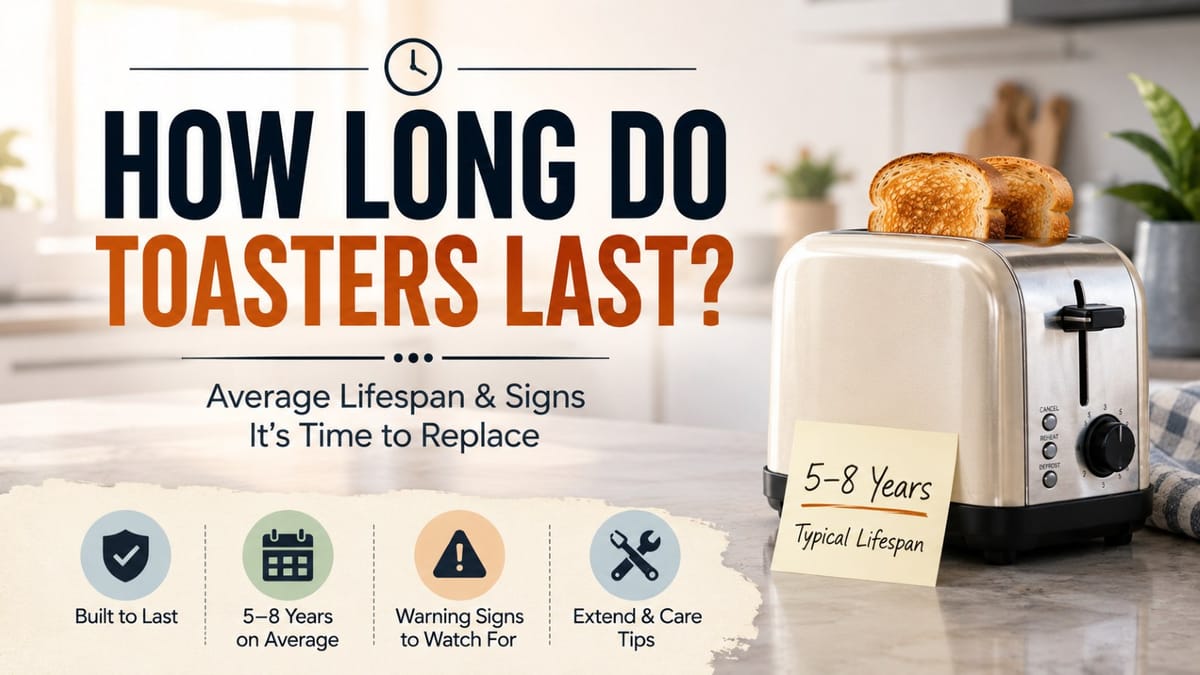
How Long Do Toasters Last?
Average toaster lifespan and signs it may be time to replace your toaster.

A toaster is one of the simplest appliances in the kitchen, but it still has a limited lifespan. If your toaster is browning unevenly, taking longer than usual, smelling burnt, or failing to stay down when you press the lever, you may be wondering: how long do toasters last?

Most household toasters last around 5 to 8 years with normal use. Some budget models may begin showing problems after only a few years, while better-built models can last 10 years or longer when properly maintained.

In this guide, we’ll explain the average toaster lifespan, what affects durability, when to replace a toaster, and whether it makes sense to repair one.

Quick Answer

Most toasters last 5 to 8 years under normal household use.

A lightly used toaster in a single-person household may last closer to 10 years, while a heavily used toaster in a large family kitchen may wear out sooner. The most common reasons to replace a toaster include uneven heating, lever failure, damaged cords, burning smells, and repeated malfunctions.

If your toaster still works safely and browns bread evenly, there is usually no need to replace it. But if it shows electrical issues, overheating, smoke, or unreliable operation, replacement is often the safer and more practical choice.

Key Takeaways

  • The average toaster lifespan is about 5 to 8 years.
  • Higher-quality toasters may last 10 years or longer with careful use.
  • Frequent use, poor cleaning habits, and power issues can shorten lifespan.
  • Uneven browning, burning smells, and lever failure are common replacement signs.
  • Most basic toasters are not worth repairing unless the issue is minor.
  • Regular crumb tray cleaning can help extend toaster life and reduce fire risk.

Table of Contents

  • What Is the Average Lifespan of a Toaster?
  • Why Some Toasters Last Longer Than Others
  • What Factors Affect How Long a Toaster Lasts?
  • Signs It’s Time to Replace Your Toaster
  • Can You Extend the Life of a Toaster?
  • Should You Repair or Replace a Toaster?
  • Toaster Lifespan by Type
  • Is It Safe to Use an Old Toaster?
  • Common Mistakes That Shorten Toaster Life
  • FAQ
  • Final Verdict

What Is the Average Lifespan of a Toaster?

The average toaster lasts about 5 to 8 years in normal home use.

That range depends heavily on how often the toaster is used. A toaster used once or twice per week will usually last longer than one used every morning by a family of four. Heat, crumbs, internal spring wear, and electrical stress all add up over time.

Here is a general lifespan estimate:

Toaster TypeTypical Lifespan
Budget 2-slice toaster3–5 years
Standard 2-slice toaster5–8 years
4-slice toaster5–8 years
Premium toaster8–10+ years
Toaster oven5–10 years

These are general estimates, not guarantees. A well-maintained budget toaster may last longer than expected, while a premium model can still fail early if used heavily or poorly maintained.

Why Some Toasters Last Longer Than Others

Toasters are simple appliances, but they still rely on several parts that wear down over time.

A typical toaster includes:

  • Heating elements
  • Bread carriage
  • Lever mechanism
  • Timer or browning control
  • Spring system
  • Crumb tray
  • Electrical wiring
  • Thermostat or control board

When people ask how many years a toaster should last, they often focus only on the brand or price. Those matter, but they are not the whole story.

A toaster lasts longer when it has durable heating elements, a stable carriage mechanism, reliable controls, and good heat management. It also lasts longer when users clean it regularly and avoid forcing bread that does not fit properly.

What Factors Affect How Long a Toaster Lasts?

Build Quality

Build quality is one of the biggest factors in toaster lifespan.

A cheap toaster may work perfectly well at first, but lightweight internal parts can wear out faster. The lever may become loose, the browning dial may become inconsistent, or the heating elements may stop working evenly.

Higher-quality models often use better materials, stronger internal mechanisms, and more consistent heat control. That does not mean every expensive toaster is worth the price, but better construction can improve durability.

Frequency of Use

Usage frequency matters.

A toaster used once a day may go through more than 350 heating cycles per year. A toaster used multiple times each morning can easily pass 1,000 cycles per year.

More cycles mean more wear on:

  • Heating elements
  • Springs
  • Lever mechanisms
  • Electrical contacts
  • Toasting controls

For a large household, a stronger 4-slice toaster may be more practical than forcing a small 2-slice model to run repeated cycles every morning.

Cleaning Habits

Crumbs are one of the most common causes of toaster problems.

Over time, crumbs collect at the bottom of the toaster and around internal components. This can lead to:

  • Burning smells
  • Smoke
  • Uneven heat
  • Fire risk
  • Poor performance

A clean toaster is more likely to heat consistently and operate safely.

Most toasters have a removable crumb tray. Emptying it regularly is one of the easiest ways to extend the life of the appliance.

Bread Type and Food Debris

Not all bread is equally toaster-friendly.

Items that create more crumbs, sugar, oil, or melted residue can shorten toaster life. These include:

  • Thick artisan bread
  • Bagels
  • Frozen waffles
  • Pastries
  • Bread with seeds
  • Bread with cheese or toppings

Traditional pop-up toasters are not designed for messy foods. Using them for unsuitable items can cause residue buildup and internal damage.

Power Fluctuations

Electrical issues can also affect toaster lifespan.

Power surges, unstable outlets, or overloaded kitchen circuits may damage small appliances over time. If your toaster suddenly stops working after a power outage or electrical event, the problem may not be the toaster alone.

For most households, this is not the main reason toasters fail, but it can be a factor.

Moisture and Storage Conditions

Toasters should be kept dry.

A toaster stored near a sink, under a leaking cabinet, or in a damp basement kitchen may develop corrosion or electrical problems sooner. Moisture is especially concerning because a toaster contains exposed heating elements and electrical components.

If a toaster has been exposed to water, it should not be used until it is inspected or replaced.

Signs It’s Time to Replace Your Toaster

A toaster does not need to be replaced just because it is old. If it works safely and consistently, it may still be fine.

However, the following signs suggest it may be time for a replacement.

1. Uneven Browning

If one side of the bread is toasted while the other side remains pale, the heating elements may be wearing out.

Uneven browning can also happen when crumbs block heat flow, so cleaning the toaster is a good first step. But if cleaning does not help, the toaster may be near the end of its useful life.

2. Burning Smells That Do Not Go Away

A light burnt smell can happen when crumbs collect inside the toaster. But if the smell continues after cleaning, there may be residue, damaged wiring, or failing internal parts.

Persistent burning smells should not be ignored.

3. Smoke During Normal Use

Smoke is a stronger warning sign than odor alone.

If smoke appears during normal toasting, unplug the toaster and inspect it after it cools. If crumbs or food pieces are the cause, cleaning may solve the problem. If smoke continues, replacement is the safer choice.

4. The Lever Will Not Stay Down

A toaster lever that will not stay down may indicate a worn latch, faulty magnet, or electrical control issue.

Sometimes this happens because the toaster is not plugged in correctly, so check the outlet first. If the problem continues, the internal mechanism may be failing.

5. Toast Pops Up Too Early or Too Late

If toast pops up too soon, comes out burnt, or no longer follows the browning setting, the timing or thermostat system may be wearing out.

Inconsistent timing can make the toaster frustrating to use and may signal deeper control issues.

6. Damaged Cord or Plug

A damaged cord is a serious safety concern.

Replace the toaster if you notice:

  • Frayed wiring
  • Cracked insulation
  • Burn marks near the plug
  • Loose plug connection
  • Sparks

Do not continue using a toaster with visible electrical damage.

7. Repeated Malfunctions

One small issue may not justify replacement. But if the toaster repeatedly jams, overheats, smells burnt, or browns unevenly, replacement is usually more practical than troubleshooting every few weeks.

Can You Extend the Life of a Toaster?

Yes. You can often extend a toaster’s lifespan with basic maintenance and careful use.

Empty the Crumb Tray Regularly

This is the most important maintenance step.

For regular household use, empty the crumb tray every one to two weeks. If the toaster is used daily, clean it more often.

Always unplug the toaster before cleaning.

Shake Out Loose Crumbs Carefully

After unplugging the toaster and allowing it to cool, you can gently turn it over and shake out loose crumbs.

Do not insert metal tools into the toaster slots. This can damage heating elements and create an electrical hazard.

Avoid Oversized Bread

Forcing thick bread into narrow slots can damage the bread carriage or heating elements.

If you frequently toast bagels, thick slices, or artisan bread, choose a toaster with extra-wide slots.

Do Not Toast Messy Foods

Avoid putting foods with melted cheese, frosting, butter, or sticky toppings directly into a pop-up toaster.

These foods can drip, burn, and damage the inside of the appliance.

Keep the Toaster Dry

Store the toaster away from sinks and wet surfaces. Make sure hands are dry when plugging it in or operating it.

Use the Right Browning Setting

Repeatedly running extra cycles because the first setting was too low can increase wear. Find the setting that works best for your bread type and use it consistently.

Should You Repair or Replace a Toaster?

For most basic toasters, replacement is more practical than repair.

A simple toaster is usually inexpensive, and professional repair costs may be higher than buying a new model. In addition, many toaster problems involve electrical or heating components, which are not ideal for DIY repair unless you have proper experience.

Here is a simple decision guide:

ProblemRepair or Replace?
Crumbs causing smokeClean first
Lever occasionally sticksClean and inspect
Uneven browning after cleaningReplace
Damaged power cordReplace
Burning smell after cleaningReplace
Sparks or electrical noiseReplace immediately
Premium toaster with replaceable partsConsider repair

If the toaster has sentimental value or is a premium model, repair may be worth considering. But for most households, a safe replacement is the better option.

Toaster Lifespan by Type

Budget 2-Slice Toasters

Budget 2-slice toasters are affordable and convenient, but they may not last as long as better-built models.

Typical lifespan:

3 to 5 years

They can be a good choice for light use, dorm rooms, rentals, or occasional toasting.

Standard 2-Slice Toasters

A standard 2-slice toaster is often the best balance of price, size, and durability.

Typical lifespan:

5 to 8 years

This is a practical option for individuals, couples, and small households.

4-Slice Toasters

A 4-slice toaster is useful for families or anyone who makes multiple servings at once.

Typical lifespan:

5 to 8 years

Because they handle more bread at once, they may reduce repeated heating cycles compared with using a smaller toaster multiple times.

Premium Toasters

Premium toasters may use better materials, smoother controls, and more consistent heating systems.

Typical lifespan:

8 to 10+ years

However, price alone does not guarantee durability. Before paying more, consider whether the model has strong user feedback, replaceable parts, and features you will actually use.

Toaster Ovens

A toaster oven is more complex than a pop-up toaster. It can toast, bake, reheat, and sometimes air fry.

Typical lifespan:

5 to 10 years

Because toaster ovens are used for more cooking tasks, their lifespan depends heavily on frequency of use and cleaning habits.

Is It Safe to Use an Old Toaster?

An old toaster can be safe if it is clean, undamaged, and working properly.

Age alone is not the problem. Safety depends on condition.

A toaster may still be safe if:

  • The cord is intact
  • It heats evenly
  • It does not smoke during normal use
  • The lever works reliably
  • There are no sparks or electrical sounds
  • The crumb tray is cleaned regularly

However, stop using a toaster if you notice:

  • Burning smells that persist
  • Smoke
  • Sparks
  • Melted plastic
  • Damaged wiring
  • A loose plug
  • Unusual buzzing or crackling

Kitchen appliances that generate heat should always be treated carefully.

Does a More Expensive Toaster Last Longer?

Sometimes, but not always.

A more expensive toaster may last longer if the higher price reflects better materials, stronger internal parts, and better heat control. But some expensive models cost more because of design, branding, specialty settings, or cosmetic finishes.

Before buying a replacement toaster, look for practical durability signs:

  • Solid lever movement
  • Extra-wide slots if needed
  • Removable crumb tray
  • Good user feedback over time
  • Clear warranty terms
  • Simple controls
  • Stable base
  • Easy cleaning

A reliable mid-range toaster may be a better value than a premium model with features you rarely use.

Common Mistakes That Shorten Toaster Life

Ignoring the Crumb Tray

A full crumb tray can cause burning smells, smoke, and uneven heating. It also increases fire risk.

Forcing Thick Bread Into Narrow Slots

This can damage the carriage, heating elements, or spring mechanism.

Toasting Foods That Belong in a Toaster Oven

Cheese, buttered bread, pastries, and sticky foods should not go directly into a pop-up toaster.

Using Metal Objects to Remove Stuck Bread

Never insert a knife, fork, or metal utensil into a plugged-in toaster. Unplug it first and use safe methods to remove stuck food.

Keeping the Toaster Near Water

A toaster should not sit next to a sink or wet prep area.

Repeatedly Running Extra Cycles

If the toaster no longer browns properly without multiple cycles, it may be losing performance.

How To Know If Your Toaster Is Still Worth Keeping

Ask these questions:

QuestionIf YesIf No
Does it toast evenly?Keep using itConsider replacement
Is the cord in good condition?Keep using itReplace
Does it smell normal?Keep using itInspect or replace
Does the lever work reliably?Keep using itConsider replacement
Is it easy to clean?Keep using itReplace if unsafe
Does it match your household needs?Keep using itUpgrade if needed

If your toaster passes these basic checks, there is no urgent need to replace it.

If it fails several of them, a new toaster may be safer and more convenient.

FAQ

How many years should a toaster last?

Most toasters last around 5 to 8 years with normal household use. Lightly used or higher-quality models may last 10 years or more.

How often should you replace a toaster?

You should replace a toaster when it becomes unsafe, unreliable, or unable to toast evenly. There is no need to replace it on a fixed schedule if it still works properly.

Is it safe to use a 10-year-old toaster?

A 10-year-old toaster may still be safe if the cord, plug, heating elements, and lever all work correctly. Replace it if you notice smoke, sparks, burning smells, or damaged wiring.

What are signs you need a new toaster?

Common signs include uneven browning, burning smells, smoke, lever failure, damaged cords, sparks, and repeated malfunctions.

Can a toaster be repaired?

Some toaster issues can be repaired, but most basic toasters are not worth professional repair. If the problem involves electrical components or damaged wiring, replacement is usually safer.

Do expensive toasters last longer?

Some expensive toasters last longer because they use better materials and internal parts. However, price alone does not guarantee durability.

Why does my toaster smell burnt?

A burnt smell often comes from crumbs or food residue inside the toaster. If cleaning does not solve the problem, the appliance may have internal damage or failing components.

Can crumbs damage a toaster?

Yes. Excess crumbs can burn, smoke, affect heating performance, and create a fire risk. Regular cleaning helps extend toaster life.

Final Verdict

So, how long do toasters last?

Most household toasters last 5 to 8 years, though actual lifespan depends on build quality, frequency of use, cleaning habits, and overall condition. A lightly used toaster may last much longer, while a heavily used or poorly maintained toaster may fail sooner.

You do not need to replace a toaster simply because it is old. But if it smokes, sparks, smells burnt after cleaning, browns unevenly, or has a damaged cord, replacement is usually the safest choice.

For most households, the best approach is simple: keep the toaster clean, use it properly, and replace it when safety or reliability becomes questionable.

Editorial Note: Appliance Research Hub creates independent appliance guides, comparisons, and research-based articles using publicly available product information, manufacturer specifications, consumer feedback, and editorial analysis. We aim to help readers make informed purchasing decisions, but product details, availability, and pricing may change over time.