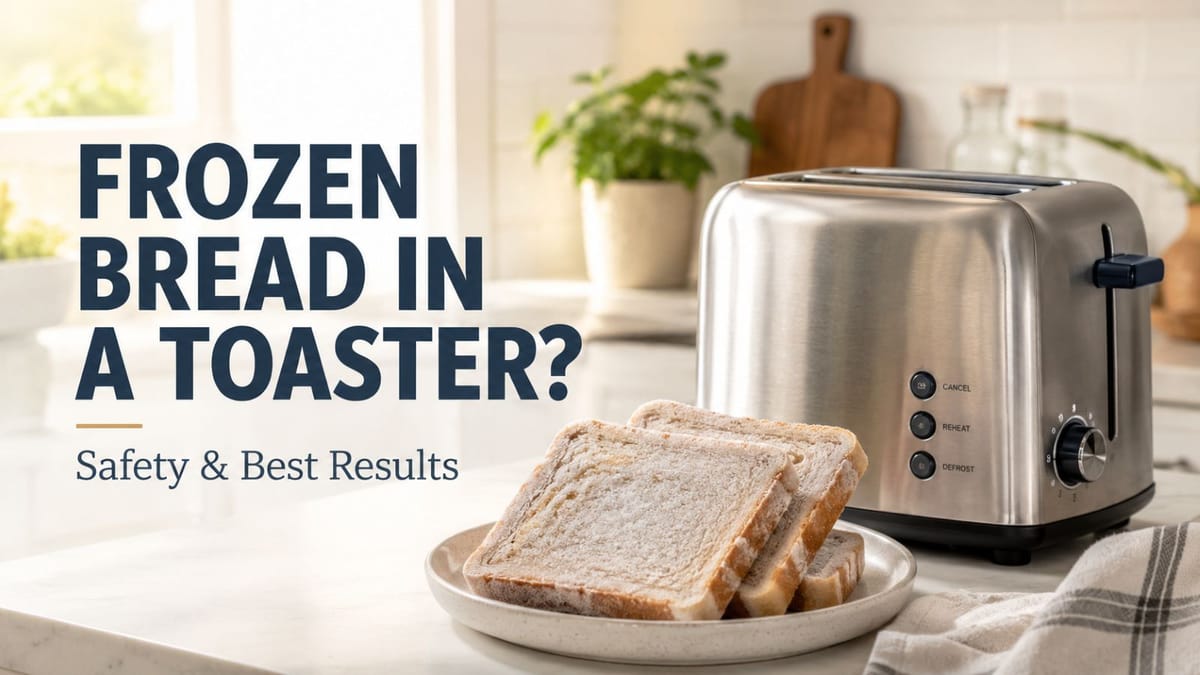
Can You Put Frozen Bread in a Toaster?
Can frozen bread go straight into a toaster? Learn when it is safe, how to use the frozen setting, and which frozen foods to avoid.

Freezing bread is one of the easiest ways to reduce waste in the kitchen. Instead of rushing to finish a loaf before it goes stale, many households keep extra slices in the freezer and take out only what they need.
But when breakfast is busy and the bread is still frozen, the next question is simple: can you put frozen bread directly in a toaster?
The answer is usually yes. Most standard pop-up toasters can toast frozen bread safely, and many modern models even include a dedicated frozen setting. In most cases, you do not need to thaw bread before toasting it.
That said, frozen bread does behave a little differently from fresh bread. It may need more time, a slightly different browning level, or a little care if the slices are thick, icy, or stuck together. Some frozen foods also do not belong in a pop-up toaster at all, especially if they contain cheese, frosting, butter, or fillings that can melt and drip.
This guide explains when frozen bread can go straight into the toaster, how to use the frozen setting properly, which mistakes to avoid, and how to get better toast from frozen slices.
Quick Answer
Yes, you can usually put frozen bread directly into a toaster.
Most household pop-up toasters are designed to handle frozen bread, especially plain sandwich bread, frozen bagels, English muffins, and toaster waffles. If your toaster has a Frozen setting, use it. That setting usually adds extra time to help the bread thaw and toast more evenly.
However, avoid putting frozen bread in the toaster if it is covered in large ice crystals, stuck together, too thick for the slots, or topped with ingredients that can melt or drip. For messy foods, a toaster oven or regular oven is usually safer.
Key Takeaways
- Frozen bread can usually go straight into a pop-up toaster.
- A toaster’s frozen setting helps adjust the cycle for bread that starts colder.
- Plain frozen sandwich bread, bagels, English muffins, and toaster waffles usually work well.
- Do not force thick or frozen-together slices into narrow toaster slots.
- Avoid frozen foods with cheese, butter, frosting, sauces, or fillings in a pop-up toaster.
- If bread comes out cold in the center, use a slightly longer setting rather than the highest heat.
- Regular crumb tray cleaning helps prevent burnt smells and smoke.
Why People Freeze Bread
Bread is one of the most commonly wasted foods in the kitchen. A loaf may seem fresh when you buy it, but within a few days it can become dry, stale, or moldy if it is not used quickly.
Freezing helps solve that problem.
People freeze bread because it allows them to:
- Buy larger loaves without wasting slices
- Keep specialty bread fresh for longer
- Save money by buying in bulk
- Always have breakfast bread available
- Reduce food waste
- Preserve homemade bread
- Avoid last-minute grocery trips
Frozen bread is also convenient. You can take out one or two slices at a time instead of thawing an entire loaf.
For many households, the freezer is not just storage. It becomes part of the breakfast routine.
Is It Safe to Toast Frozen Bread?
For plain bread, yes. Toasting frozen bread is generally safe.
A pop-up toaster works by using heating elements to brown the surface of bread. Frozen bread simply starts at a lower temperature. As it heats, the ice crystals inside the slice melt and the moisture evaporates. The bread then begins to toast in a similar way to fresh bread.
The main safety concern is not the frozen bread itself. The bigger concerns are fit, moisture, toppings, and residue.
Frozen bread is safe to toast when:
- The slice fits easily into the toaster slot
- The bread is plain or toaster-safe
- There are no large ice clumps
- The slice is not stuck to another slice
- There are no dripping fillings or toppings
- The toaster is clean and working properly
Frozen bread becomes more problematic when people force thick slices into the toaster, try to toast messy frozen foods, or use a toaster that already has crumbs and residue inside.
What Does the Frozen Setting Do?
Many modern toasters have a button labeled Frozen, Defrost, or something similar. This setting is designed for bread that comes straight from the freezer.
The frozen setting usually does one simple thing: it extends or adjusts the toasting cycle.
Fresh bread only needs to brown. Frozen bread needs to warm through first, then brown. If the toaster uses the same cycle for both, the outside may toast before the center fully warms.
The frozen setting helps by giving the bread more time.
This can result in:
- More even browning
- Less chance of a cold center
- Better texture
- More consistent results
- Less need to run a second cycle
The exact behavior depends on the toaster model. Some toasters simply add time. Others adjust the heating pattern. Either way, if the button exists, it is usually the best place to start.
How to Toast Frozen Bread Properly
Toasting frozen bread is simple, but a few small habits can improve the result.
Check the Slices First
Before putting frozen bread into the toaster, look at the slices.
Make sure they are separated and not stuck together. If two slices are frozen into one block, gently separate them before toasting. Do not force a frozen block into the toaster.
Also check for large ice crystals. A little frost is normal, but heavy ice buildup can create extra moisture and uneven results.
If the slice looks very icy, let it sit on the counter for a few minutes before toasting.
Use the Frozen Setting If Available
If your toaster has a frozen setting, use it for the first attempt.
Choose your usual browning level and press the frozen button. The toaster should adjust the cycle automatically.
For many people, this produces better results than simply increasing the browning dial.
Start With a Moderate Browning Level
Do not immediately use the darkest setting.
Frozen bread usually needs more time, not necessarily maximum heat. If the heat is too high, the outside can become overly dark while the center is still cool or chewy.
Start with a medium setting. If the toast is too light, increase slightly next time.
Watch the First Slice
Different breads behave differently.
Thin sandwich bread may toast quickly. Thick sourdough may need more time. Bagels may need a special setting. Frozen waffles may follow package directions.
The first slice is your test. Once you find the right setting for that bread, the next slices are easier.
Let the Toast Rest Briefly
Frozen bread releases moisture as it heats. After toasting, let the slice sit for a few seconds before adding butter or toppings.
This helps the surface crisp slightly and reduces sogginess.
Frozen Bread vs. Fresh Bread: Does It Toast Differently?
Frozen bread can toast very well, but it does not always behave exactly like fresh bread.
Fresh bread starts at room temperature. Frozen bread starts colder and contains frozen moisture. Because of that, the toaster needs to warm the slice before it can brown it properly.
You may notice that frozen bread:
- Takes longer to toast
- Browns more slowly at first
- May feel softer in the center if under-toasted
- Can become very crisp if over-toasted
- May need one setting higher than fresh bread
That does not mean frozen bread is worse. In fact, many people prefer freezing bread because it keeps slices fresher than leaving them on the counter for too long.
A frozen slice of good bread often toasts better than a stale slice of room-temperature bread.
What Types of Frozen Bread Work Best?
Some breads handle freezing and toasting better than others.
Sandwich Bread
Plain sandwich bread is usually the easiest frozen bread to toast.
The slices are thin, even, and designed to fit standard toaster slots. They warm through quickly and brown predictably.
This is the best starting point if you are new to freezing bread.
Bagels
Frozen bagels can work well in a toaster, especially if your toaster has wide slots and a bagel setting.
Slice the bagel before freezing if possible. A whole frozen bagel is harder to cut safely and may not fit well.
Use the bagel setting if your toaster has one, and make sure the cut side faces the correct direction according to your toaster design.
English Muffins
English muffins are a good freezer-to-toaster food.
They often maintain texture well and toast nicely from frozen. Like bagels, they are easiest to use when split before freezing.
Frozen Waffles
Frozen waffles are commonly designed for toaster use.
Follow the instructions on the package. Some may need one cycle, while others may need slightly more time depending on the toaster.
Sourdough and Artisan Bread
Frozen sourdough or artisan bread can toast well, but it may be less predictable.
The slices may be thick, uneven, or too wide for standard slots. If the bread does not fit comfortably, do not force it.
For thick artisan slices, a toaster oven may give better results.
Homemade Bread
Homemade bread can be frozen and toasted, but slice thickness matters.
Try to cut even slices before freezing. Uneven slices can toast unevenly, especially if one part is much thicker than another.
When You Should Not Put Frozen Bread in a Toaster
Frozen bread is usually fine, but not every frozen item belongs in a pop-up toaster.
Avoid putting these items into a standard toaster.
Bread With Butter or Oil
Do not put buttered frozen bread into a pop-up toaster.
As butter melts, it can drip into the toaster, create smoke, and leave residue. That residue may later cause burnt smells or even increase fire risk.
Cheese Toast or Filled Bread
Frozen bread with cheese, meat, sauce, or fillings should not go into a pop-up toaster.
Cheese can melt and drip. Fillings can leak. Small pieces can fall into the appliance and burn.
Use a toaster oven, oven, or skillet instead.
Frosted Pastries
Some frozen pastries may look toaster-friendly, but frosting and fillings can create problems.
If the package says the product is toaster-safe, follow the directions carefully. If not, use another appliance.
Very Thick Slices
A slice that barely fits is not a good candidate for a pop-up toaster.
Forcing bread into the slot can damage the toaster, make the bread stick, or cause uneven heating.
Icy Bread With Large Frost Buildup
A little frost is normal. Heavy ice buildup is different.
Large ice crystals can create extra moisture and may affect texture. Let the slice sit briefly or remove loose ice before toasting.
Bread Wrapped in Foil or Paper
Never put frozen bread into a pop-up toaster while wrapped in foil, paper, plastic, or packaging.
The toaster slot should contain only toaster-safe food.
Can Frozen Bread Damage a Toaster?
Plain frozen bread should not damage a toaster that is in good working condition.
Toasters are designed to heat bread, and frozen bread is still bread. The appliance may simply need a little more time.
Problems are more likely when:
- Bread is forced into the slots
- Slices are too thick
- Food contains dripping ingredients
- Crumbs are allowed to build up
- The toaster is already damaged
- The wrong setting is used repeatedly
- Packaging or foil is accidentally placed inside
If you use plain frozen bread that fits properly, damage is unlikely.
Why Does Frozen Bread Sometimes Toast Unevenly?
Uneven results usually come from one of four causes: moisture, thickness, toaster settings, or bread shape.
Frozen bread may have more moisture near the center. If the toaster cycle is too short, the outside warms and browns while the inside stays soft or cool.
Thick bread can also toast unevenly because heat takes longer to reach the middle.
Irregular artisan slices may sit closer to one heating element than the other, which can cause one side to brown more.
The solution is usually simple: use the frozen setting, choose a moderate browning level, and adjust gradually.
If one side always browns more than the other, the issue may be the toaster rather than the bread.
Should You Thaw Bread Before Toasting?
Usually, no. You do not need to thaw frozen bread before toasting.
That is one of the main benefits of freezing sliced bread. You can take out a slice and toast it immediately.
However, thawing briefly may help if:
- The slice has heavy frost
- The bread is very thick
- The slices are stuck together
- The toaster does not have a frozen setting
- The bread is delicate and breaks easily
In most cases, a few minutes on the counter is enough. You do not need to fully thaw the bread.
Does Frozen Bread Taste Different After Toasting?
Properly frozen bread can taste very close to fresh bread after toasting.
The quality depends on how it was frozen and stored. Bread that is tightly wrapped and protected from freezer air usually tastes better than bread left loosely in a bag.
Bread may taste less fresh if it has:
- Freezer burn
- Absorbed freezer odors
- Been frozen for too long
- Dried out before freezing
- Been repeatedly thawed and refrozen
For best results, freeze bread while it is still fresh. Do not wait until it is already stale.
Toasting can improve the texture of frozen bread because heat restores crispness and warmth.
How to Freeze Bread for Better Toast
Good frozen toast starts before the bread reaches the toaster.
Slice Before Freezing
If the bread is not already sliced, slice it before freezing. This lets you remove only what you need.
Separate Slices
If you are freezing soft bread, consider placing parchment paper between slices or freezing slices slightly separated before putting them into a bag.
This helps prevent slices from sticking together.
Use Airtight Packaging
Freezer air dries bread out. Use a freezer-safe bag or airtight container.
Press out extra air before sealing.
Label the Bag
Write the date on the package.
Bread can remain safe in the freezer for a long time, but quality is best when it is used within a reasonable period.
Freeze While Fresh
Do not use the freezer as a rescue tool for bread that is already stale.
Freeze bread when it still tastes good.
Common Mistakes to Avoid
Using the Highest Setting Too Soon
Frozen bread may need more time, but the darkest setting can burn the outside.
Start moderate and adjust.
Forcing Bread Into the Slots
If the slice does not fit, do not push it down.
Use a toaster oven instead.
Toasting Messy Frozen Foods
Foods with cheese, frosting, butter, sauces, or fillings can leak into the toaster.
Use another appliance.
Ignoring Crumbs
Frozen bread can still drop crumbs. Bagels, waffles, and seeded bread may create even more debris.
Clean the crumb tray regularly.
Running Too Many Back-to-Back Cycles
If the bread comes out too light, it is okay to toast a little longer. But repeated full cycles can overheat or burn the bread.
Use shorter follow-up heating if your toaster allows it.
Leaving the Toaster Unattended
Toasters are quick, but they still use high heat.
Stay nearby, especially when testing a new type of frozen bread.
Frozen Bread and Toaster Safety
Using frozen bread safely is mostly about common sense.
Make sure the toaster is clean, the bread fits, and the food is appropriate for a pop-up toaster.
Stop using the toaster if you notice:
- Smoke
- Sparks
- Burning plastic smell
- Damaged cord
- Stuck lever
- Repeated overheating
- Food that will not release
A little steam from frozen bread can be normal as moisture evaporates. Smoke is different. If you smell burning or see smoke, stop the cycle and inspect the toaster after unplugging it.
FAQ
Can you put frozen bread straight into the toaster?
Yes. Most plain frozen bread can go directly into a toaster. Use the frozen setting if your toaster has one.
Do you need to thaw frozen bread before toasting?
Usually, no. Frozen bread can normally be toasted straight from the freezer. You may want to let it sit briefly if it has large ice crystals or if the slices are stuck together.
What does the frozen button on a toaster do?
The frozen button usually adds time or adjusts the toasting cycle so the bread can warm through before browning fully.
Can frozen bread damage a toaster?
Plain frozen bread that fits properly should not damage a toaster. Problems are more likely with oversized slices, messy toppings, or food that leaks.
Can you toast frozen bagels?
Yes. Frozen bagels can be toasted, especially if they are sliced before freezing. Use the bagel setting if your toaster has one.
Can you put frozen waffles in a toaster?
Yes, many frozen waffles are designed for toaster use. Follow the package instructions.
Why is my frozen bread cold in the middle?
The toaster cycle may be too short, or the slice may be too thick. Use the frozen setting or increase the browning level slightly.
Why does frozen bread come out soggy?
Sogginess can happen if the bread has too much ice buildup or if the toaster does not run long enough. Remove excess frost and use the frozen setting.
Is frozen bread less healthy than fresh bread?
Freezing does not significantly change the basic nutrition of bread. The ingredients and bread type matter more than whether it was frozen.
Can you toast frozen bread with butter on it?
No. Buttered bread should not go into a pop-up toaster because melted butter can drip, burn, and create residue.
Final Verdict
So, can you put frozen bread in a toaster?
Yes. In most cases, plain frozen bread can go straight from the freezer into a pop-up toaster. Many toasters are designed for this, and the frozen setting can help the bread warm through and brown more evenly.
The key is to keep it simple. Use bread that fits properly, avoid slices with heavy ice buildup, and never put buttered, cheesy, frosted, filled, or wrapped foods into a standard toaster.
For everyday sandwich bread, bagels, English muffins, and many toaster waffles, frozen-to-toaster is a practical and safe routine. It saves time, reduces food waste, and makes it easier to keep bread on hand without worrying about it going stale.
A good freezer habit and the right toaster setting can turn frozen bread into crisp, warm toast in just a few minutes.
Editorial Note: Appliance Research Hub creates independent appliance guides, comparisons, and research-based articles using publicly available product information, manufacturer instructions, consumer safety considerations, and editorial analysis. We aim to help readers make informed household appliance decisions, but appliance features and safety recommendations may vary by model. Always follow the manual for your specific toaster.