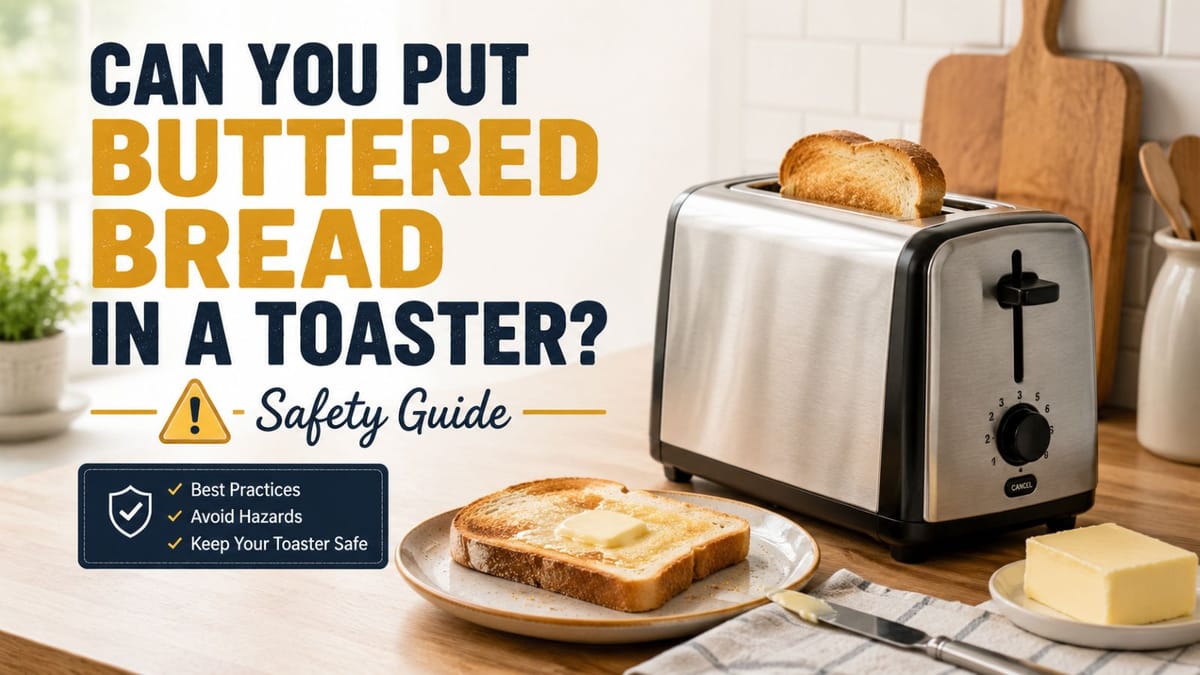
Can You Put Buttered Bread in a Toaster?
Can buttered bread go in a toaster? Learn why it is unsafe for pop-up toasters, what risks it creates, and better ways to make buttered toast.

Buttered toast is one of the simplest kitchen pleasures: warm bread, melted butter, crisp edges, and a soft center. But when the bread is still plain and the toaster is sitting right there, it is natural to wonder whether you can save a step by buttering the bread first and then putting it into the toaster.
The short answer is no. You should not put buttered bread in a standard pop-up toaster.
A regular toaster is designed for plain bread, bagels, waffles, English muffins, and similar dry foods that fit safely inside the slots. Butter changes the situation. As it heats, butter melts quickly. It can drip into the toaster, coat the heating elements, create smoke, leave greasy residue, and increase the risk of burning smells or flare-ups.
That does not mean you cannot make great buttered toast. It just means the order matters. Toast the bread first, then add butter while the bread is still hot. If you want bread that is toasted with butter already on it, use a skillet, oven, air fryer, or toaster oven instead of a pop-up toaster.
This guide explains why buttered bread is a bad idea in a standard toaster, what can happen if butter drips inside, and the safer ways to make buttery toast without damaging your appliance.
Quick Answer
You should not put buttered bread in a pop-up toaster.
Butter melts as it heats. In a toaster, melted butter can drip onto internal parts, create smoke, leave greasy residue, and cause burnt smells. It may also make the toaster harder to clean and less safe to use.
For the safest and best result, toast the bread first and add butter afterward. If you want butter to cook into the bread, use a skillet, oven, toaster oven, or air fryer instead.
Key Takeaways
- Do not put buttered bread in a standard pop-up toaster.
- Butter can melt and drip into the appliance.
- Grease inside a toaster can create smoke, odor, residue, and fire risk.
- Toast first, then butter while the bread is hot.
- Use a skillet or toaster oven if you want buttered bread toasted directly.
- If butter has already dripped into your toaster, unplug it and let it cool before cleaning.
- Never try to clean inside a toaster while it is plugged in.
Why Buttered Bread Seems Like It Should Work
At first, buttering bread before toasting sounds reasonable.
After all, butter melts on hot toast. If the toaster is going to heat the bread anyway, why not let the butter melt while the bread toasts? It feels efficient. It also sounds like it might create a richer, crispier slice.
That logic works in some cooking methods. A buttered slice of bread can brown beautifully in a skillet. It can become crisp in a toaster oven. It can turn golden in an oven or under a broiler when watched carefully.
The problem is that a pop-up toaster is different.
A pop-up toaster holds bread vertically inside narrow slots. Heating elements sit close to the bread. Crumbs fall into the bottom. There is limited space, limited visibility, and no tray designed to catch melted fat.
That design is great for dry bread. It is not designed for dripping butter.
What Happens When You Put Buttered Bread in a Toaster?
When buttered bread goes into a toaster, the butter begins to soften almost immediately. As the temperature rises, it melts and can run down the surface of the bread.
Some of that melted butter may soak into the bread. But some of it can drip.
Once butter drips into the toaster, several things can happen.
Butter Can Smoke
Butter contains fat, water, and milk solids. When exposed to high heat, especially on hot metal or near heating elements, it can smoke and burn.
A little smoke may appear quickly. The smell can be strong and unpleasant. It may also linger the next time you use the toaster.
If your toaster already smells burnt, food residue may be one of the reasons. For a broader troubleshooting guide, see our article on why your toaster smells like burning.
Butter Can Leave Greasy Residue
Unlike dry crumbs, melted butter can coat surfaces inside the toaster.
Grease residue is harder to remove than ordinary crumbs. It can cling to the crumb tray, heating area, or internal walls. Over time, it may collect more crumbs and make the toaster smell worse.
This is one reason greasy or topped foods are not a good match for pop-up toasters.
Butter Can Increase Fire Risk
Any grease exposed to high heat can become a safety concern. A toaster already uses intense heat in a confined space. Adding melted fat into that environment is unnecessary and risky.
A single small mistake may not always cause a serious problem, but it is still not a habit worth forming.
Butter Can Make the Toaster Harder to Clean
Most pop-up toasters are not easy to clean deeply.
You can remove the crumb tray, shake out loose crumbs, and wipe the exterior. But you usually cannot wash the inside like a baking tray. If butter gets into places you cannot reach, the smell and residue may remain.
That is why prevention matters more than cleanup.
Why Pop-Up Toasters Are Made for Dry Foods
A standard toaster is a simple appliance with a specific job: dry-heat browning.
It works best with foods that are relatively dry, firm, and properly sized. Plain bread, bagels, toaster waffles, and English muffins all fit that pattern. They may release crumbs, but they do not usually leak liquid fat.
Buttered bread is different because it introduces grease.
The toaster does not have a flat cooking surface. It does not have a drip pan designed for fat. It does not have the same open visibility as a skillet. And it does not let you easily adjust or move the bread once the cycle begins.
That is why some foods that are perfectly fine in an oven or skillet are not appropriate for a pop-up toaster.
Is It Ever Okay to Put Lightly Buttered Bread in a Toaster?
It is still not a good idea.
Some people think a very thin layer of butter might be safe because it will soak into the bread. Sometimes it might. But the result is unpredictable. The butter may still melt unevenly, run toward one edge, or drip from the bottom of the slice.
The risk also depends on the bread. Thin sandwich bread may bend. Thick bread may hold more butter. Frozen bread may release extra moisture. A slice with holes or an open crumb can allow melted butter to pass through more easily.
Because there is no clear “safe amount” of butter for a standard toaster, the better rule is simple: do not butter bread before putting it into a pop-up toaster.
Toast first. Butter afterward.
The Best Way to Make Buttered Toast
The easiest and safest method is also the classic method.
Put plain bread in the toaster. Toast it to your preferred browning level. As soon as it pops up, spread butter over the hot surface.
This gives you several advantages:
- The toaster stays cleaner.
- The butter melts on the bread instead of inside the appliance.
- You can control how much butter you use.
- The bread is easier to handle.
- The flavor is still rich and familiar.
For softer toast, butter immediately after toasting so the butter melts fully into the bread. For a crispier texture, wait a few seconds before spreading butter so the surface stays slightly firmer.
How to Make Extra-Buttery Toast Safely
If you want toast where the butter cooks into the bread and creates a golden, crisp surface, use a different appliance or cooking method.
Use a Skillet
A skillet is one of the best ways to make buttery toast.
Spread butter on one side of the bread, place it butter-side down in a warm skillet, and cook until golden. You can butter the second side and flip if you want both sides crisp.
This method gives you more control than a pop-up toaster. You can watch the bread, adjust the heat, and remove it when it reaches the texture you like.
Use a Toaster Oven
A toaster oven is better suited for buttered bread because it usually has a tray or rack and more open space.
Place the buttered bread on a tray or foil-lined pan if your toaster oven manual allows it. Watch it closely, because buttered bread can brown quickly.
A toaster oven is also better for garlic bread, cheese toast, and other topped breads that do not belong in a pop-up toaster.
Use a Regular Oven
For several slices, a regular oven works well.
Place bread on a baking sheet, spread butter on top, and bake or broil carefully. The oven method is especially useful for garlic bread or toast for a group.
If using the broiler, stay nearby. Butter and bread can go from golden to burnt quickly.
Use an Air Fryer
An air fryer can also make crisp buttered bread, depending on the model and basket design.
Use a moderate temperature, avoid overloading the basket, and check early. Light toppings may move around in strong airflow, so keep the setup simple.
What About Garlic Bread?
Garlic bread should not go into a standard pop-up toaster.
Garlic bread usually contains butter or oil, garlic, herbs, and sometimes cheese. These ingredients can melt, drip, burn, or fall into the toaster.
Use an oven, toaster oven, skillet, or air fryer instead.
If the garlic bread is frozen, follow the package instructions. Most frozen garlic bread products are designed for ovens or toaster ovens, not pop-up toasters.
What About Bread With Margarine or Oil?
The same basic rule applies.
Margarine, oil, spreads, and butter-like products can melt and drip. Some spreads may contain water, oils, flavorings, or other ingredients that burn or smoke when exposed to toaster heat.
Do not put bread with these spreads into a pop-up toaster.
This includes:
- Butter
- Margarine
- Olive oil
- Garlic butter
- Flavored spreads
- Cheese spreads
- Nut butter
- Jam
- Honey
- Cream cheese
Some of these are delicious on toast. They should simply be added after toasting.
Can You Put Buttered Bread in a Toaster Bag?
Toaster bags are reusable heat-resistant sleeves designed to help contain certain foods inside a toaster. Some people use them for grilled cheese-style sandwiches or reheating foods without direct contact with the toaster slots.
However, you should be careful.
Not all toaster bags are the same, and not all toaster manufacturers recommend using them. If you use toaster bags, follow both the bag instructions and the toaster manual. Make sure the bag fits properly, does not touch heating elements, and is intended for the food you are preparing.
Even with toaster bags, very greasy foods can still be messy. A toaster oven or skillet is usually a better choice for buttered bread.
What If You Already Put Buttered Bread in the Toaster?
If you already did it once, do not panic. The right response depends on what happened.
If there was no smoke, no smell, and no visible residue, the toaster may be fine. Still, it is worth cleaning the crumb tray after the appliance cools.
If there was smoke, a burnt smell, or visible dripping, take the situation more seriously.
Step 1: Turn Off and Unplug the Toaster
Stop the cycle if it is still running. Unplug the toaster from the wall.
Do not try to clean or remove anything while the toaster is plugged in.
Step 2: Let It Cool Completely
Give the toaster time to cool before touching the inside or removing the crumb tray.
Hot metal and heating elements can burn skin.
Step 3: Remove the Crumb Tray
Pull out the crumb tray and check for melted butter, greasy crumbs, or burnt residue.
Wash the tray if your manual allows it. Dry it completely before putting it back.
Step 4: Shake Out Loose Crumbs
Over a sink or trash can, gently shake the toaster upside down to remove loose crumbs.
Do not hit the toaster aggressively.
Step 5: Inspect for Odor
After cleaning and drying, use the toaster only if it appears safe and normal. If it continues to smoke, spark, smell strongly of burning grease, or behave strangely, stop using it.
If you are unsure, replace the toaster. A basic toaster is usually not worth taking risks with.
For ongoing maintenance, see our guide on how often you should clean your toaster.
How to Prevent Burnt Smells in a Toaster
Burnt smells often come from crumbs, food residue, or debris trapped inside the appliance. Butter makes this worse because it can help crumbs stick and burn.
To reduce burnt smells:
- Empty the crumb tray regularly.
- Do not toast greasy foods.
- Avoid oversized slices that scrape the heating area.
- Do not put bread with loose toppings into the slots.
- Let the toaster cool between heavy use.
- Keep the toaster away from paper towels, curtains, and packaging.
- Stop using it if you see sparks or persistent smoke.
A clean toaster is safer, smells better, and usually performs more consistently.
Why Adding Butter After Toasting Works Better
Adding butter after toasting is not just safer. It also gives you better control.
When the bread comes out hot, butter softens quickly and spreads evenly. You can decide whether you want a light layer or a richer coating. You can also add salt, cinnamon sugar, jam, honey, or other toppings after the toast is safely on a plate.
This method keeps the toaster doing what it does best: browning plain bread.
Then you can finish the toast the way you like.
Common Mistakes to Avoid
Buttering Bread Before Toasting
This is the main mistake. Even a small amount of butter can melt and drip.
Using the Toaster for Garlic Bread
Garlic bread belongs in an oven, toaster oven, skillet, or air fryer, not a pop-up toaster.
Trying to Toast Cheese or Spreads
Cheese, nut butter, jam, and other toppings can melt, drip, or burn. Add them after toasting.
Ignoring the Crumb Tray
A toaster with old crumbs is more likely to smoke and smell. Greasy crumbs are even worse.
Cleaning While Plugged In
Always unplug the toaster before cleaning. Never insert metal tools into a plugged-in toaster.
Forcing Food Into the Slots
If bread or food does not fit easily, use another appliance.
FAQ
Can you put buttered bread in a toaster?
No. You should not put buttered bread in a standard pop-up toaster because the butter can melt, drip, smoke, and leave greasy residue inside the appliance.
What happens if butter gets in a toaster?
Butter can burn, smoke, smell bad, and leave residue that is difficult to clean. In some cases, grease and crumbs may increase fire risk.
Is it safe to toast bread with butter on it?
It is not recommended in a pop-up toaster. Use a skillet, oven, toaster oven, or air fryer if you want to toast bread with butter already on it.
Should you butter toast before or after toasting?
For a pop-up toaster, butter the bread after toasting. This keeps melted butter out of the appliance and still gives you warm, buttery toast.
Can you put garlic bread in a toaster?
No. Garlic bread usually contains butter or oil and may include herbs or cheese. Use an oven, toaster oven, skillet, or air fryer instead.
Can you put margarine on bread before toasting?
Not in a pop-up toaster. Margarine can melt and drip just like butter.
Can butter in a toaster cause a fire?
Grease exposed to high heat can be a fire risk, especially if it collects with crumbs. Avoid putting buttered bread in a toaster.
How do you clean butter out of a toaster?
Unplug the toaster, let it cool, remove and clean the crumb tray, and gently shake out loose crumbs. Do not put water inside the toaster. If it continues to smoke or smell strongly, stop using it.
Can you use toaster bags for buttered bread?
Only if both the toaster bag instructions and your toaster manual allow it. Even then, a skillet or toaster oven is usually better for buttered bread.
What is the safest way to make buttered toast?
Toast plain bread first, then spread butter on it while it is hot.
Final Verdict
So, can you put buttered bread in a toaster?
For a standard pop-up toaster, the answer is no. Butter melts quickly, and a toaster is not designed to handle dripping fat. Melted butter can smoke, burn, leave residue, and make the appliance harder to clean.
The safer method is simple: toast first, butter afterward. You still get warm, delicious buttered toast without putting grease inside the toaster.
If you want bread that cooks with butter already on it, use a skillet, toaster oven, oven, or air fryer instead. Those methods give you more control, better visibility, and a cooking surface that is much better suited to butter.
A toaster is excellent for plain bread. Let it do that job, then finish your toast on the plate.
Editorial Note: Appliance Research Hub creates independent appliance guides, comparisons, and research-based articles using publicly available product information, manufacturer instructions, consumer safety considerations, and editorial analysis. We aim to help readers make informed household appliance decisions, but appliance features and safety recommendations may vary by model. Always follow the manual for your specific toaster.